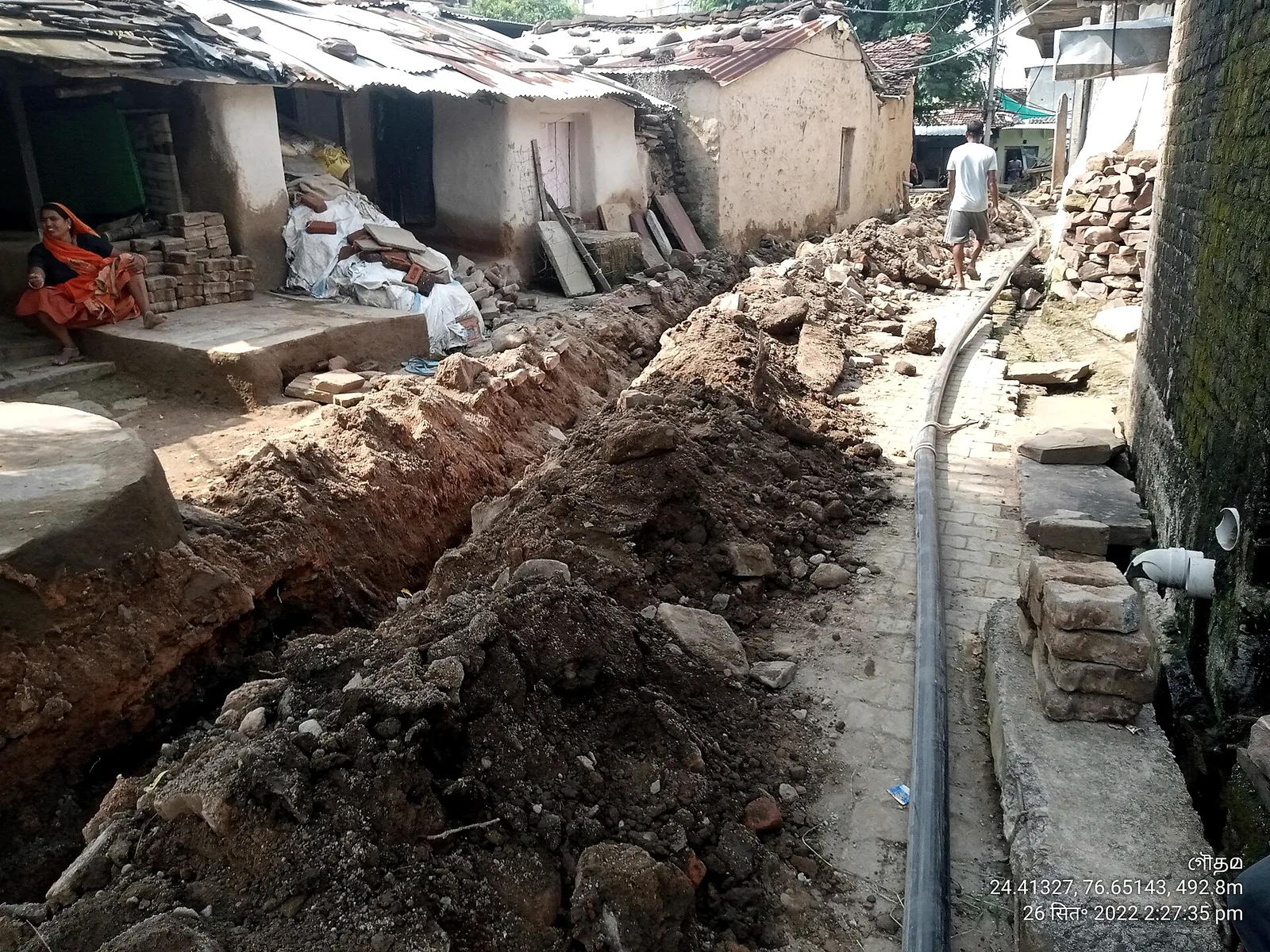
Water & Sewer Pipelines
Transmission mains and collection systems through congested ground.
Pipelines are linear projects with a thousand interfaces. We survey the route, resolve utilities before excavation, and keep restoration crews moving behind the pipe crews so the public sees a completed street, not an open trench that lingers for months.
Scope of work
- Water transmission and distribution mains
- Gravity sewer and force mains
- Horizontal directional drilling and jack-and-bore crossings
- Cured-in-place pipe lining and rehabilitation
- Hydrants, valves, meters and appurtenances
- Pressure testing, disinfection and sampling
Technical capabilities
- Open-cut pipe installation in all soil conditions
- Trenchless crossings of roads, rail and waterways
- Restrained-joint PVC, steel and ductile iron
- Deep trench shoring and groundwater control
- Pipeline condition assessment and CIPP
- Traffic control and full street restoration
The route is the project
Before a pipe crew moves, we walk the alignment with the surveyor and utility locator, pothole the conflicts and confirm the depth of every existing crossing. The schedule is built around the ground conditions we can prove, with allowance for the ones we cannot.
Trenchless where it matters
Road, rail and waterway crossings are completed by HDD or jack-and-bore to avoid closing the assets above. We design the launch and receiving pits around the geotechnical profile and verify line and grade continuously.
Testing is part of the work
Pressure testing, chlorination, flushing and bacteriological sampling are planned as production activities with their own crews and hold points. A main is not accepted because it is buried; it is accepted because it passed.
Restoration and public access
Driveway access, mail delivery, garbage service and business entrances are maintained throughout. Final paving and landscape restoration follow the pipe crew closely so the corridor returns to normal as quickly as possible.
Water & Sewer Pipelines in the field.
How does a contractor get on the Craneway Civil Construction bid list?
What is Craneway Civil Construction’s bonding capacity?
Do you self-perform concrete, earthwork and pipeline work?
How do you handle traffic control and public impact?
What delivery methods do you offer?
Let’s scope the work.
Send the drawings, the site constraints or the schedule. We will come back with a plan and an honest opinion.
Start a conversation